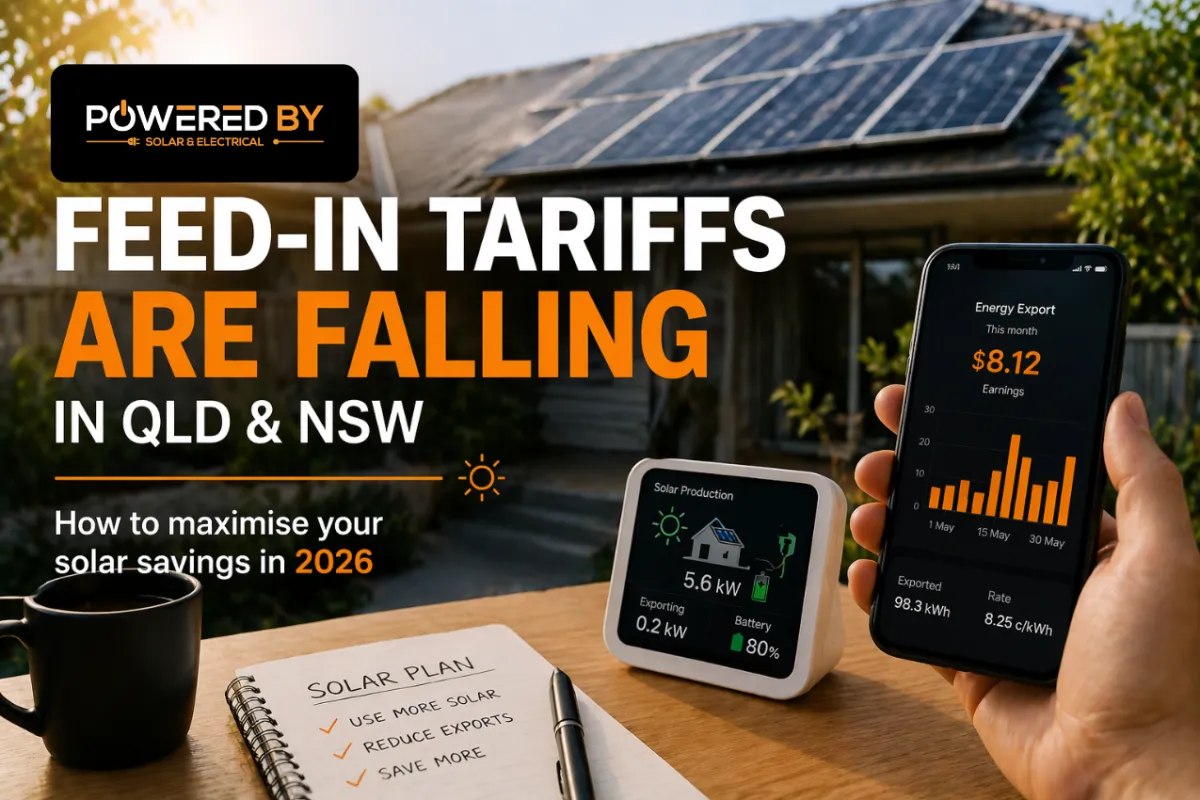
Feed-in Tariffs Are Falling in QLD & NSW: How to Maximise Your Solar Savings in 2026
Feed-in Tariffs Are Falling in QLD & NSW: How to Maximise Your Solar Savings in 2026
Why Feed-in Tariffs Are Dropping
Why Exporting Is No Longer the Goal
What Is Solar Self-Consumption?
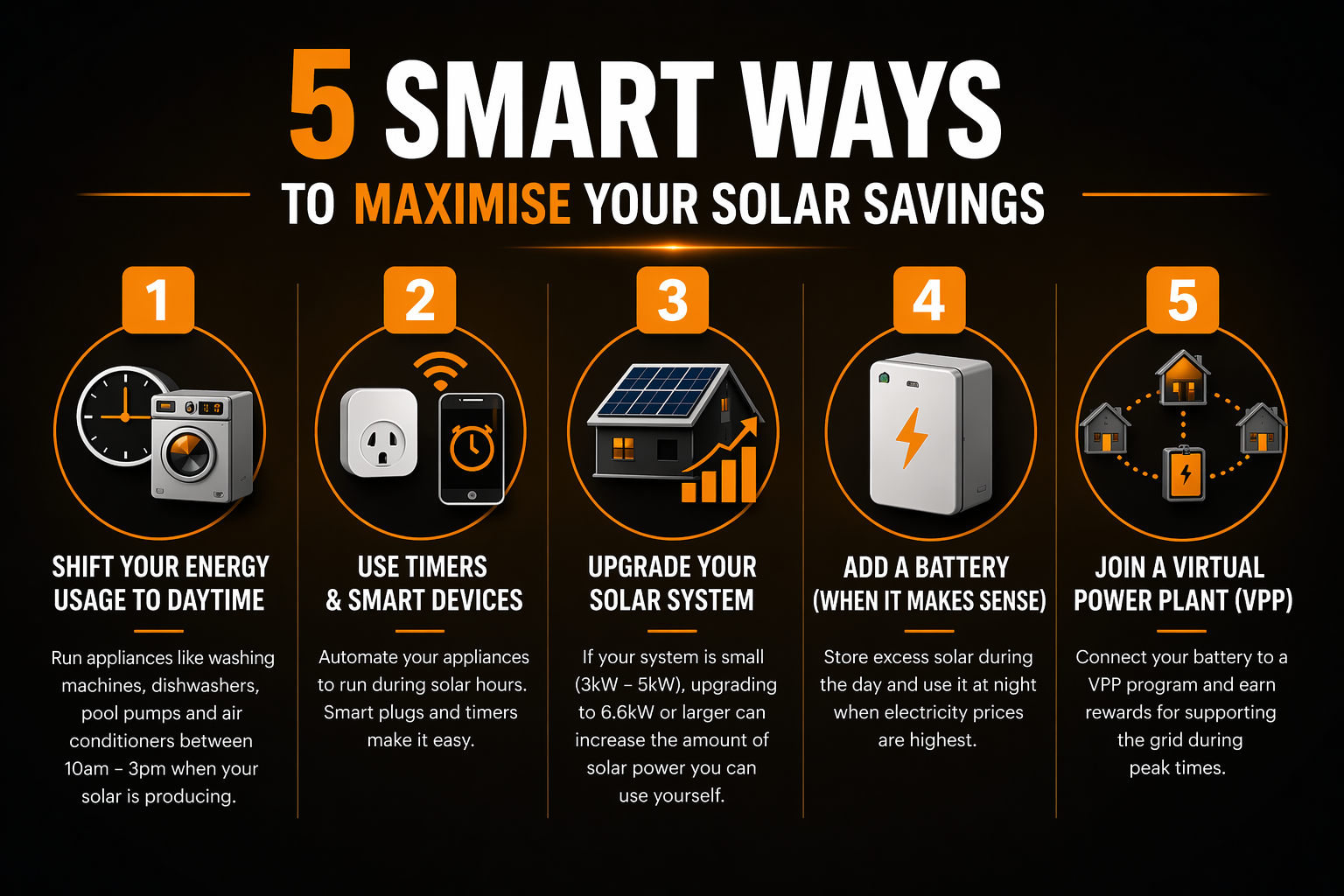
5 Smart Ways to Beat Low Feed-in Tariffs
1. Shift Your Energy Usage to Daytime
2. Use Timers and Smart Devices
3. Upgrade Your Solar System (If Undersized)
4. Add a Battery (When It Makes Sense)
5. Join a Virtual Power Plant (VPP)
When Should You Consider a Battery?
If you already have solar panels installed, you may have noticed something frustrating:
Your feed-in tariff keeps dropping.
Across Queensland and New South Wales, many homeowners are now earning less than ever for exporting solar energy back to the grid often as low as 5 to 10 cents per kWh.
So the big question becomes:
If exporting solar isn’t paying much anymore, how do you actually maximise your savings?
In this guide, we’ll show you exactly how QLD and NSW homeowners are adapting and how you can get more value from your solar system in 2026.
Why Feed-in Tariffs Are Dropping
Feed-in tariffs were once much higher even over 20 cents per kWh in earlier years.
But today, they’ve declined significantly due to:
Increased solar adoption across Australia
Oversupply of daytime solar energy
Grid infrastructure limitations
Energy retailers adjusting pricing models
In simple terms:
There’s now too much solar being exported during the day
And not enough demand for it.
Why Exporting Is No Longer the Goal
Here’s the key shift every solar owner needs to understand:
Solar is no longer about selling energy, it’s about using your own energy.
Let’s compare:
Export solar: ~5 to 10 cents per kWh
Buy electricity: ~30 to 45 cents per kWh
That gap is massive.
So instead of:
Selling low → Buying high
The smarter strategy is:
Use your own solar first
This is called self-consumption.
What Is Solar Self-Consumption?
Self-consumption means:
Using the electricity your solar system generates in real time, instead of exporting it.
The more solar energy you use yourself, the more money you save.
Example:
Use solar at home = save 30 to 40 cents per kWh
Export solar = earn only 5 to 10 cents per kWh
That’s why increasing self-consumption is now the #1 strategy.
5 Smart Ways to Beat Low Feed-in Tariffs
1. Shift Your Energy Usage to Daytime
This is the easiest win.
Run high energy appliances during solar production hours:
Washing machine
Dishwasher
Pool pump
Air conditioning
Hot water systems
Best time:
👉 10am to 3pm
This ensures you use your own solar instead of exporting it cheaply.
2. Use Timers and Smart Devices
Smart plugs and timers can automate your savings.
You can:
Schedule appliances to run during solar hours
Automatically heat water during the day
Control devices remotely
This turns your home into a solar-optimised system without extra effort.
3. Upgrade Your Solar System (If Undersized)
Many older systems in QLD and NSW are:
3kW to 5kW
Installed years ago
These systems may not generate enough power for modern homes.
If your system is small:
👉 Upgrading to 6.6kW or larger can increase self-consumption potential.
More solar = more power you can use yourself.
4. Add a Battery (When It Makes Sense)
A battery allows you to:
Store excess solar during the day
Use it at night
Avoid peak electricity prices
Instead of exporting for 8 cents, you:
👉 Save 30 to 40 cents later
However, batteries are not always the fastest payback option. They are best suited for:
High evening energy use
Homes with EVs
Areas with frequent blackouts
Long-term homeowners
5. Join a Virtual Power Plant (VPP)
A Virtual Power Plant (VPP) connects your battery to a network.
This allows your system to:
Support the grid during peak demand
Earn credits or payments
Increase overall system value
In QLD and NSW, VPP programs are growing and can provide:
Upfront incentives
Ongoing bill credits
Smarter energy optimisation
It’s one of the most overlooked ways to improve returns.
QLD vs NSW: What’s Different?
Queensland
High solar generation year-round
Lower feed-in tariffs in many areas
Strong potential for daytime self-consumption
Storm season makes batteries attractive
New South Wales
Higher peak electricity prices
Time-of-use tariffs common
Batteries can provide stronger financial benefit
VPP programs expanding rapidly
When Should You Consider a Battery?
A battery makes more sense if:
You use most of your energy at night
Your feed-in tariff is low
You want blackout protection
You have excess solar being exported daily
You plan to stay in your home long-term
If you mainly use power during the day, you may benefit more from optimising usage first.
The Future of Solar Savings in Australia
The trend is clear:
Feed-in tariffs will likely continue declining
Electricity prices are rising
Self-consumption is becoming more valuable
Smart energy systems are the future
Solar is still one of the best investments — but the strategy has changed.
Final Thoughts
If you already have solar in QLD or NSW, the goal in 2026 is simple:
Use more of your own power.
Feed-in tariffs may be falling, but your savings don’t have to.
By adjusting how and when you use electricity, upgrading your system where needed, and exploring options like batteries or VPPs, you can continue getting strong value from your solar investment.
Want to Get More from Your Solar System?
At Powered By Solar, we help homeowners across Queensland and New South Wales optimise their systems for real-world savings.
We can assess:
Your current solar performance
Your energy usage patterns
Whether a battery or upgrade makes sense
Get in touch to see how you can maximise your solar savings in 2026!


