Hybrid Inverters Explained | Battery-Ready Solar for QLD & NSW Homes
Hybrid Inverters Explained | Battery-Ready Solar for QLD & NSW Homes
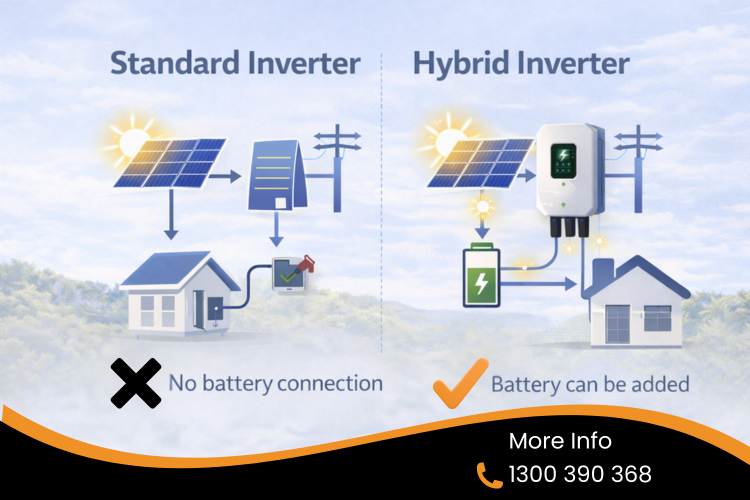
Standard Inverter vs Hybrid Inverter
Why Hybrid Inverters Matter in QLD & NSW
1. They Make Future Battery Upgrades Easier
3. Blackout Protection (With the Right Setup)
4. Cleaner, Simpler System Design
5. Ideal for Homes Adding EV Chargers
When Should You Upgrade to a Hybrid Inverter?
What If You Already Have a Standard Inverter?
1. Installing a cheap inverter without battery capability
2. Oversizing or undersizing your inverter
If you’re thinking about adding a battery to your home in Queensland or New South Wales, there’s one piece of equipment that matters more than most people realise:
Your inverter.
Specifically, whether you have or should install a hybrid inverter.
Many homeowners invest in solar first, then years later decide to add battery storage. But without the right inverter setup, upgrading can become more complicated and expensive than expected.
In this guide, we’ll explain:
What a hybrid inverter actually is
How it differs from a standard inverter
Why it matters for battery upgrades
When QLD and NSW homeowners should consider one
Common mistakes to avoid
What Is a Hybrid Inverter?
A hybrid inverter is a solar inverter that can manage:
Solar panel generation
Grid electricity
Battery storage
All in one integrated system.
It converts DC electricity from your solar panels into usable AC power for your home just like a normal inverter but it also has built-in capability to connect and control a battery.
Think of it as a battery-ready inverter.
Standard Inverter vs Hybrid Inverter
Here’s the difference in simple terms:
Standard Solar Inverter
Converts solar power for immediate household use
Sends excess power to the grid
Cannot directly connect to a battery
If you later want a battery, you may need:
An additional battery inverter
More wiring
More installation cost
Hybrid Inverter
Converts solar power
Manages grid interaction
Directly connects to batteries
Optimises when to store or export energy
It’s designed for homes that either:
Already have a battery
Plan to install one in the future
Why Hybrid Inverters Matter in QLD & NSW
Battery interest is rising quickly in both states due to:
Increasing electricity prices
Low feed-in tariffs
Storm-related blackouts
Growing EV ownership
Time-of-use tariffs
Hybrid inverters give homeowners flexibility to respond to all of these factors.
1. They Make Future Battery Upgrades Easier
Many QLD and NSW homes installed solar 5–10 years ago. At that time, batteries were expensive and less common. So standard inverters were installed.
Now those same homeowners want to add battery storage but their inverter isn’t compatible.
With a hybrid inverter:
Adding a battery is simpler
Installation time is shorter
Upgrade costs are lower
System efficiency is higher
If you’re installing solar today and think you might add a battery later, a hybrid inverter is often the smarter choice.
2. Better Energy Management
Hybrid inverters intelligently decide:
When to power your home from solar
When to store excess energy
When to charge the battery
When to draw from the grid
This is especially valuable in NSW where peak electricity pricing can be significantly higher in the evening.
Instead of exporting solar for 8 cents and buying it back for 40 cents, a hybrid system stores and uses your own power.
3. Blackout Protection (With the Right Setup)
In parts of Queensland, storms and extreme weather can cause outages. In regional NSW, grid reliability can also vary.
A hybrid inverter paired with a compatible battery can provide:
Automatic switchover during outages
Backup circuits for essential appliances
Greater home resilience
Standard inverters shut down during blackouts even if the sun is shining.
Hybrid systems can continue operating when properly configured.
4. Cleaner, Simpler System Design
Instead of having:
One solar inverter
One battery inverter
Extra cabling
Extra wall space
Hybrid systems combine functionality into one streamlined unit.
This often means:
Less clutter
Fewer components
Improved long-term reliability
5. Ideal for Homes Adding EV Chargers
As EV ownership grows in QLD and NSW, energy demands increase.
Hybrid inverters work particularly well in homes that:
Have solar
Plan to add a battery
Charge EVs at home
They allow better management of:
Solar charging
Night-time battery use
Peak tariff avoidance
If you’re future-planning for EV charging, hybrid is usually the better foundation.

When Should You Upgrade to a Hybrid Inverter?
You should consider a hybrid inverter if:
Your current inverter is 5+ years old
You are planning to install a battery
You are installing new solar
You want blackout backup
You want to reduce evening grid usage
In many cases, if your inverter is nearing end of warranty, upgrading to a hybrid inverter instead of replacing like-for-like can be a smart move.
What If You Already Have a Standard Inverter?
Don’t panic, you still have options.
You can:
Add an AC-coupled battery with its own inverter
Replace your inverter with a hybrid model
Wait until your inverter needs replacing
Each option has pros and cons depending on:
System size
Roof layout
Budget
Future plans
A system assessment is always recommended before making changes.
Common Mistakes to Avoid
1. Installing a cheap inverter without battery capability
You may save upfront but pay more later when upgrading.
2. Oversizing or undersizing your inverter
Poor system design reduces efficiency and limits battery potential.
3. Not checking compatibility
Not all batteries work with all hybrid inverters.
4. Ignoring export limits
Some QLD and NSW areas have grid export restrictions that impact system sizing.
Planning properly avoids costly rework.
Popular Hybrid Inverter Brands in Australia
Some widely used hybrid inverter brands in QLD and NSW include:
Sungrow Hybrid
Fronius Gen24
GoodWe Hybrid
Sigenergy Hybrid Systems
Choosing the right brand depends on:
Budget
Battery compatibility
Backup requirements
App monitoring preferences
Is a Hybrid Inverter Worth It?
For many homeowners planning a battery in the next few years, yes.
The benefits include:
Easier battery integration
Lower long-term upgrade costs
Better control of energy usage
Increased property appeal
Greater blackout protection
While hybrid inverters may cost slightly more upfront than standard models, they can save money over time by reducing complexity when you’re ready to add storage.
Hybrid inverters are not just a technical upgrade they’re a future-proofing decision.
In Queensland and New South Wales, where energy prices are rising and battery interest continues to grow, installing a hybrid inverter can make your solar system far more adaptable.
If you’re planning a battery upgrade, installing solar for the first time, or replacing an older inverter, it’s worth considering whether hybrid capability aligns with your long-term goals.
A properly designed system today can save you thousands in future upgrade costs.

At Powered By Solar, we make it easy to choose the system that suits your lifestyle and budget. Whether you’re going on-grid, hybrid, or fully off-grid, our team designs and installs high-quality systems using trusted brands like Sungrow, Tesla Powerwall, and Sigenery.
From custom design to government rebates and ongoing support, we’ll help you make the switch to clean, reliable solar power the smart way.
Ready to take control of your energy? Contact Powered By Solar today for a free consultation and personalised quote!


