
Solar System Maintenance Checklist for Australian Homes: Keep Your Panels Running in QLD & NSW Conditions
Solar System Maintenance Checklist for Australian Homes: Keep Your Panels Running in QLD & NSW Conditions
How Often Should You Maintain Solar Panels in QLD & NSW?
Solar System Maintenance Checklist
1️⃣ Visual Roof Inspection (From the Ground)
2️⃣ Monitor Your System Performance
3️⃣ Clean Solar Panels (When Necessary)
6️⃣ Check Electrical Components
7️⃣ Battery Maintenance (If Installed)
8️⃣ Storm Season Precautions (Especially in QLD)
9️⃣ Professional Solar Inspection
Signs Your Solar System Needs Servicing
How Maintenance Impacts Long-Term Savings
Installing solar is a smart investment but like any system exposed to the elements, it needs proper care to perform at its best.
In Queensland and New South Wales, solar panels face intense sun, coastal salt air, storms, dust, humidity, and seasonal debris. Without regular maintenance, performance can gradually decline without you even realising it.
This guide provides a clear, practical solar system maintenance checklist tailored specifically for Australian homes in QLD and NSW.
Why Solar Maintenance Matters
Many homeowners assume solar panels are “set and forget.” While panels are durable and designed to last 25+ years, performance can drop due to:
Dirt and dust buildup
Bird droppings
Salt corrosion (coastal areas)
Storm damage
Loose wiring
Inverter faults
Even a small amount of shading or grime can reduce output by 5–20 percent.
Regular maintenance ensures:
Maximum energy production
Lower electricity bills
Longer system lifespan
Early fault detection
Warranty protection
How Often Should You Maintain Solar Panels in QLD & NSW?
As a general guide:
Visual checks: Every 3–6 months
Panel cleaning: Every 12–24 months (more often in dusty or coastal areas)
Professional inspection: Every 2–3 years
Homes near the coast in NSW or Queensland may require more frequent cleaning due to salt exposure.
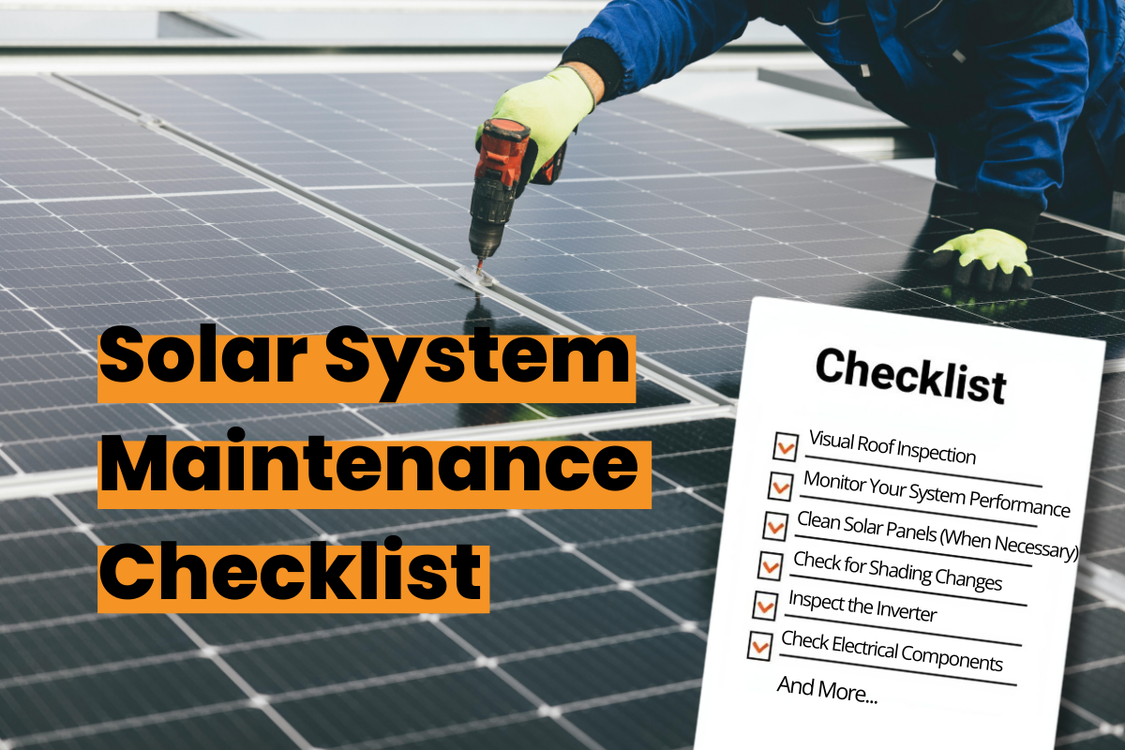
Solar System Maintenance Checklist
1️⃣ Visual Roof Inspection (From the Ground)
You don’t need to climb onto your roof. Simply look for:
Visible dirt buildup
Bird nests or droppings
Leaves caught under panels
Cracked glass
Panels lifting or misaligned
Storm debris damage
After major storms (common in QLD summer), always do a quick visual check.
2️⃣ Monitor Your System Performance
Most modern systems have monitoring apps. Check:
Daily energy production
Monthly trends
Sudden drops in output
Inverter error messages
If your system is producing significantly less than usual under similar weather conditions, it may need cleaning or servicing.
Monitoring is one of the easiest ways to catch issues early.
3️⃣ Clean Solar Panels (When Necessary)
In many suburban areas, rain does most of the cleaning. However, cleaning may be needed if:
You live near construction or dusty roads
You are close to the ocean
Bird activity is high
You notice visible grime
Important:
Never use high-pressure washers
Avoid harsh chemicals
Use soft brushes and clean water
Consider professional cleaners for safety
Safety always comes first roof access can be dangerous.
4️⃣ Check for Shading Changes
Trees grow. New buildings go up. Shade patterns shift.
Even partial shading on one panel can affect the performance of an entire string.
In QLD and NSW suburbs, fast-growing trees can slowly reduce output over time.
Trim back branches where safe and appropriate.
5️⃣ Inspect the Inverter
Your inverter is the brain of your solar system. It should:
Display normal operation (usually green light)
Show no fault codes
Run quietly without unusual noise
Remain clean and ventilated
Inverters are typically installed in garages or outdoor walls. Ensure:
Vents are not blocked
Insects or rodents are not nesting nearby
No corrosion or moisture damage is visible
Most inverters last 10–15 years, shorter than panel lifespan.
6️⃣ Check Electrical Components
While homeowners should not open electrical boxes, look for:
Damaged conduit
Loose cabling
Rusting brackets
Signs of water entry
In coastal NSW and QLD areas, corrosion can occur faster due to salt air.
If you see anything concerning, contact a licensed solar technician.
7️⃣ Battery Maintenance (If Installed)
If you have a home battery system:
Check the app for performance
Monitor charge and discharge cycles
Ensure ventilation areas are clear
Watch for error notifications
Modern batteries require minimal hands-on maintenance but should still be monitored regularly.
8️⃣ Storm Season Precautions (Especially in QLD)
Queensland homes are more exposed to:
Cyclones
Severe storms
Heavy rainfall
Hail
After extreme weather:
Inspect panels visually
Check mounting rails
Confirm inverter status
Monitor system output
Insurance claims often require documentation, so early checks matter.
9️⃣ Professional Solar Inspection
Every 2–3 years, schedule a professional check.
A licensed technician can:
Test system voltage
Inspect wiring connections
Check mounting integrity
Clean panels safely
Identify micro-cracks or hidden faults
This ensures your system remains compliant with Australian standards.
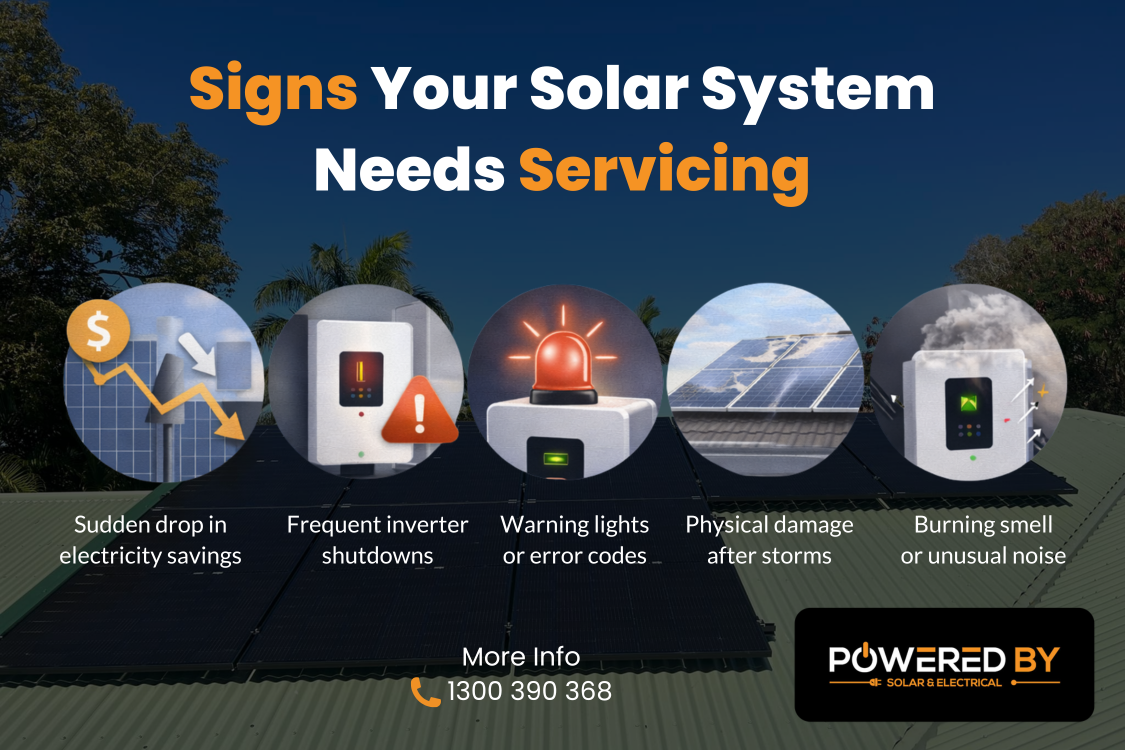
Signs Your Solar System Needs Servicing
Watch for:
Sudden drop in electricity savings
Frequent inverter shutdowns
Warning lights or error codes
Physical damage after storms
Burning smell or unusual noise
Never ignore inverter faults they are early warning signals.
How Maintenance Impacts Long-Term Savings
A poorly maintained system can lose thousands of dollars in performance over its lifespan.
Example:
If a 6.6 kW system loses 10 percent output annually due to grime or faults, that could mean hundreds of dollars per year in lost savings.
Regular checks protect your return on investment.
QLD vs NSW Maintenance Differences
Queensland Considerations
High UV exposure
Storm and hail risk
Tropical humidity (north QLD)
Rapid tree growth
NSW Considerations
Coastal salt corrosion
Bushfire ash in some regions
Seasonal debris from deciduous trees
Frost in colder regions
Maintenance frequency may vary depending on location within each state.
Should You Service Your Solar System Annually?
Annual servicing is not always required for all homes, but it is recommended if:
You live in a coastal area
You experience frequent storms
Your system is older than 10 years
You have battery storage
For many suburban homes, performance monitoring plus occasional professional inspection is sufficient.
Solar panels are durable and low-maintenance but not maintenance-free.
In Queensland and New South Wales conditions, small environmental factors can slowly reduce performance over time.
By following this simple maintenance checklist, you can:
Maximise energy production
Protect your investment
Extend system lifespan
Avoid costly repairs
A well-maintained solar system continues delivering savings for decades.

At Powered By Solar, we make it easy to choose the system that suits your lifestyle and budget. Whether you’re going on-grid, hybrid, or fully off-grid, our team designs and installs high-quality systems using trusted brands like Sungrow, Tesla Powerwall, and Sigenery.
From custom design to government rebates and ongoing support, we’ll help you make the switch to clean, reliable solar power the smart way.
Ready to take control of your energy? Contact Powered By Solar today for a free consultation and personalised quote.


