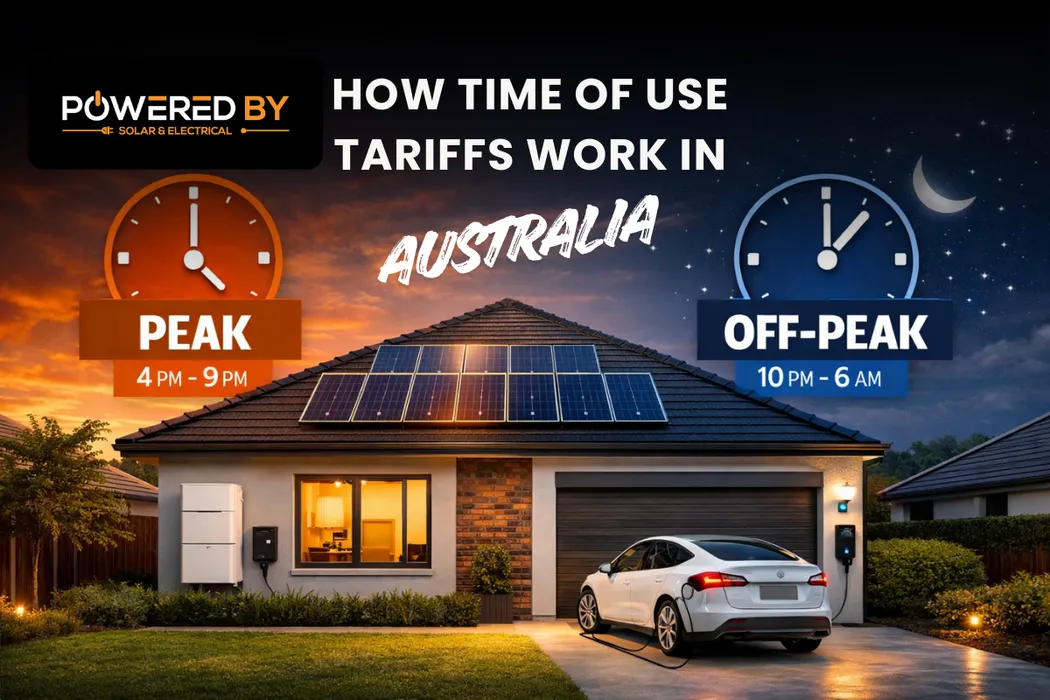
How Time of Use Tariffs Work in QLD and NSW for Solar Homeowners
How Time of Use Tariffs Work in QLD and NSW for Solar Homeowners
How Time of Use Tariffs Work in Queensland
How Time of Use Tariffs Work in New South Wales
Time of Use vs Flat Rate Tariffs
How Solar Systems Interact with Time of Use Tariffs
Why Batteries Matter on Time of Use Plans
Electricity pricing in Australia is changing. Many homeowners in Queensland and New South Wales are now on Time of Use tariffs, but not everyone understands how they work.
If you have solar, are considering a battery, or own an electric vehicle, understanding your tariff structure is essential. It directly impacts how much you pay for electricity and how much value you get from your solar system.
This guide explains how Time of Use tariffs work, how they differ in QLD and NSW, and how solar and battery systems can help reduce peak energy costs.
What Is a Time of Use Tariff?
A Time of Use tariff charges different electricity rates depending on the time of day.
Instead of paying one flat rate for all electricity usage, the price varies across three main periods:
Peak
The most expensive period. Usually late afternoon to evening when demand is highest.
Shoulder
Mid range pricing. Typically daytime hours.
Off Peak
The lowest rate. Often overnight when demand is low.
The exact time windows depend on your electricity retailer and distribution network.
How Time of Use Tariffs Work in Queensland
In Queensland, many households are still on flat tariffs, particularly in regional areas. However, Time of Use plans are becoming more common in South East Queensland, including Brisbane and the Gold Coast.
Typical QLD structure may look like:
• Peak: Late afternoon to evening
• Shoulder: Daytime hours
• Off Peak: Overnight
Peak rates can be significantly higher than off peak rates. This means running appliances during peak hours can increase electricity bills quickly.
For solar homeowners, this is important because peak periods often occur after sunset, when solar production has stopped.
How Time of Use Tariffs Work in New South Wales
Time of Use tariffs are more widespread in NSW, particularly in Sydney and Newcastle.
Many NSW households automatically move to Time of Use when installing a smart meter.
A typical NSW structure includes:
• Peak: Afternoon to evening
• Shoulder: Morning and early afternoon
• Off Peak: Overnight
NSW peak rates are often among the highest retail electricity prices in Australia.
This makes energy timing and battery storage especially valuable.

Time of Use vs Flat Rate Tariffs
A flat rate tariff charges the same price per kilowatt hour regardless of when electricity is used.
Time of Use tariffs reward households that can shift energy consumption to cheaper periods.
For example:
• Running a dishwasher overnight may cost less
• Charging an EV after midnight may be cheaper
• Using air conditioning during peak may cost significantly more
The right tariff depends on your usage habits and whether you have solar or battery storage.
How Solar Systems Interact with Time of Use Tariffs
Solar panels generate the most electricity during the middle of the day. This usually aligns with shoulder periods.
During daylight hours:
• Your home uses solar energy first
• Excess energy may be exported to the grid
• You reduce the amount of electricity purchased from the retailer
However, peak periods often occur in the late afternoon or evening. Without a battery, your home may rely on grid power during the most expensive time window.
Why Batteries Matter on Time of Use Plans
A battery stores excess solar energy generated during the day.
In QLD and NSW, this stored energy can then be used during peak periods when electricity rates are highest.
This means:
• Less electricity purchased during peak
• Reduced exposure to rising evening rates
• Greater energy independence
For EV owners in Brisbane, Sydney and Newcastle, batteries can also support smarter charging strategies.
Estimated savings vary depending on system size, household energy use, electricity rates, tariff structure and feed in tariffs. Figures are general examples only and not guaranteed outcomes.
EV Charging and Time of Use
Electric vehicles increase household electricity consumption significantly.
On a Time of Use tariff:
• Charging during peak can be expensive
• Charging during off peak is cheaper
• Charging directly from solar is often most efficient
Smart EV chargers allow homeowners to schedule charging during off peak periods or when solar production is high.
In NSW where peak rates are higher, EV charging strategy can have a noticeable impact on annual electricity costs.
Should You Switch to a Time of Use Tariff?
It depends on your lifestyle and energy habits.
Time of Use may suit households that:
• Are home during the day
• Have solar panels
• Can shift appliance use
• Own a battery
• Charge EVs overnight
Flat tariffs may suit households that:
• Use most electricity in the evening
• Cannot shift consumption
• Do not have solar
Before switching plans, homeowners should compare usage patterns and retailer pricing.
Key Takeaways for QLD and NSW Homeowners
Time of Use tariffs charge different rates depending on when electricity is used.
In Queensland, adoption is growing, particularly in Brisbane and the Gold Coast.
In New South Wales, Time of Use is already common, especially in Sydney and Newcastle.
For solar homeowners, understanding your tariff helps maximise self consumption and reduce exposure to peak pricing.
Battery systems and smart EV chargers can further improve cost efficiency by shifting energy use away from high rate periods.

At Powered By Solar, we make it easy to choose the system that suits your lifestyle and budget. Whether you’re going on-grid, hybrid, or fully off-grid, our team designs and installs high-quality systems using trusted brands like Sungrow, Tesla Powerwall, and Sigenery.
From custom design to government rebates and ongoing support, we’ll help you make the switch to clean, reliable solar power the smart way.
Ready to take control of your energy? Contact Powered By Solar today for a free consultation and personalised quote.


